

Expanding Telehealth Across State Lines: A PMHNP Checklist
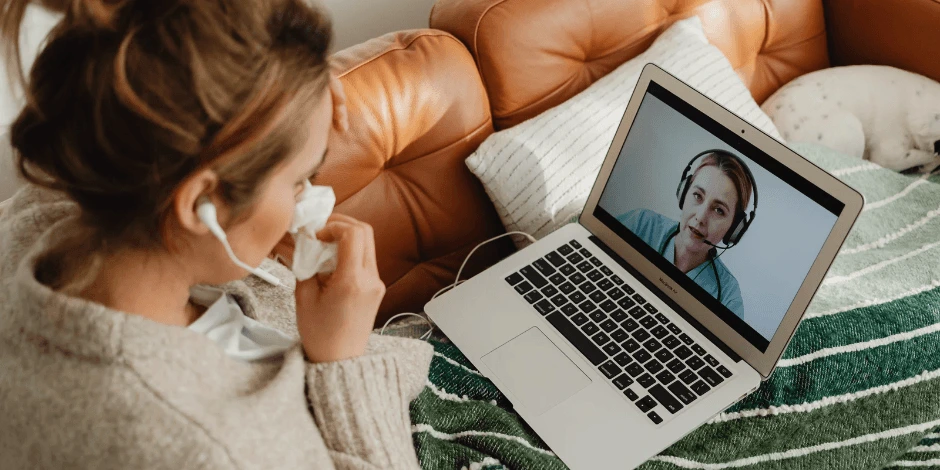
Suppose a patient you’ve been seeing via telehealth moves to another state or refers a family member to you once they’ve moved. If you’re compliant with the requirements to serve patients in multiple states, your telehealth setup can still work.
However, expanding a PMHNP telehealth practice across state lines requires five layers of compliance before you can start seeing patients out of state. You must maintain active licensure in the state in which the patient is physically located for the session, create a collaborative practice agreement with a physician licensed in that state (if required by state law), and register with the Drug Enforcement Administration (DEA) in each state where you will prescribe controlled substances.
Then, set up multi-state billing and payer enrollment and implement a telehealth platform and electronic health record (EHR) that maintain Health Insurance Portability and Accountability Act (HIPAA) compliance and accessibility across all practice states. While these requirements may be complex, a structured compliance checklist and the right partners prevent you from handling this transition alone.
Why Telehealth Across State Lines Is More Complex for PMHNPs Than Other Providers
General telehealth content fails to address the compliance complexity specific to PMHNPs. You must handle collaborative requirements, prescribing authority, and the DEA’s controlled substance regulations when offering telehealth services. You also need a license in the destination state and a billing workflow that handles any state-specific payer rules.
According to AANP’s telehealth practice resources for nurse practitioners, PMHNPs will encounter one of three possible regulatory scenarios depending on the state. Full-practice-authority states do not require a collaborative practice agreement with a physician in the state, while reduced-practice states do. A restricted-practice state may require direct physician supervision that limits your ability to practice telehealth.
The Multi-State Telehealth Compliance Checklist for PMHNPs
Approach multi-state requirements systematically. Break the five layers of compliance into a sequential, actionable framework before you see your first patient.
Layer 1: Licensure in the Patient’s State
For licensure purposes, a telehealth patient’s location is the state where the patient is physically present during the visit, not where the PMHNP is located. The PMHNP must therefore be licensed by the board of nursing in the patient’s state, which typically means holding an RN license (or a multistate RN license through the Nurse Licensure Compact) along with an Advanced Practice Registered Nurse (APRN) license or authorization issued by that state.
PMHNPs have two potential paths: individual state APRN licensure and, once it becomes operational, the APRN Compact. Processing times for individual applications vary by state board. The APRN Compact would allow an eligible APRN to hold one multistate license with the privilege to practice in other member states. However, only four states (Delaware, North Dakota, South Dakota, and Utah) have enacted the Compact, and it can’t be implemented until seven states do. Until then, PMHNPs need a separate APRN license in each state where their patients are located.
Layer 2: Collaborative Practice Agreement Requirements in the Destination State
After licensure, determine what type of physician involvement the destination state requires. Based on state requirements, you may need a licensed physician in your destination state with whom to enter a collaborative practice agreement.
First, you must find physicians in the state who are willing to sign the agreement. Then, vet them for their practice philosophy and whether they match your specialty, after which you should negotiate the terms of the agreement and establish a cooperative relationship.
PMHNPs expanding into multiple states must repeat this process numerous times, adding both compliance and administrative work. CollabDocs enables PMHNPs to connect with vetted collaborating physicians who match their specialty and state. Valant providers also receive preferred partnership pricing if they mention Valant while requesting a quote at CollaboratingDocs.com.
Layer 3: DEA Registration in Each Prescribing State
Prescribing a controlled substance to a patient who is located in a state where the PMHNP does not hold DEA registration is a federal violation. You can‘t register in a new state until you have resolved Layers 1 and 2. Expect four to eight weeks.
Because Schedule II telehealth prescribing regulatory status changes have been common since the pandemic, PMHNPs expanding into new states should verify current federal and state requirements. DEA has extended current federal telemedicine flexibilities for prescribing controlled medications through December 31, 2026, but DEA telemedicine regulations for prescribers may change at any time.
Layer 4: Telehealth Platform and EHR Requirements for Multi-State Practice
The technology you use for multi-state practice must support access from multiple provider locations without compromising on HIPAA compliance and general billing based on location-specific rules. Any HIPAA-compliant telehealth platforms for behavioral health must have business associate agreement (BAA), achievable through cloud-based EHRs for PMHNP practices that include integrated telehealth. The billing workflow must be able to handle payer-specific modifier requirements and Medicaid fee schedule variations depending on a patient’s location.
Layer 5: Multi-State Billing and Payer Enrollment
You’ll need to send separate payer enrollment applications for each state where you intend to bill insurance. Plan for 90 to 180 days per payer, which means this enrollment should begin with licensure applications. This prevents PMHNPs from facing a temporary gap in which they can only see self-pay patients.
If you anticipate this gap will occur, choose an EHR from the outset that supports self-pay and superbills. The same EHR should also enable you to transition to insurance billing.
The Multi-State PMHNP Telehealth Expansion Timeline
PMHNPs who are considering expanding to a new state may benefit from seeing that process visualized. Break the task into weeks:
- Weeks 1 and 2: Determine the destination state’s practice authority level (full, reduced, restricted) to choose the correct practice agreement.
- Weeks 2 through 4: Search for and vet collaborating physicians in restricted-practice states, if applicable. At the same time, submit your APRN licensure application.
- Weeks 4 through 8: Submit payer enrollment applications as soon as the state licensure application is received.
- Weeks 6 through 12: Submit the DEA registration application and complete the collaborative practice agreement.
- Weeks 8 through 16: Confirm you’ve received your state APRN license and that payer enrollment is open.
- Weeks 12 through 20: Begin credentialed appointments in the new state.
Establishing collaborative physician relationships in restricted states is the most common delay during expansion. Beginning this search before submitting for licensure speeds up the timeline.
What to Look for in a Collaborating Physician for Multi-State Telehealth Practice
A collaborating physician who’s a good fit should satisfy the destination state’s rules. They should also support the way you provide care:
- Confirm they have active licensure in the state and meet the state’s collaboration or supervision rules.
- Check whether they fit with the type of psychiatric or behavioral health practice you operate.
- Set clear communication expectations surrounding required meetings, questions, chart reviews, and consultations.
- Verify they are compatible with telehealth workflows instead of solely in-person practice.
If your expansion plans include a state requiring a collaborative practice agreement, CollabDocs can help. Since 2020, we’ve helped more than 7,500 NPs and PAs find collaborating physicians, and our network includes more than 3,500 physicians.
Our team, which includes NPs and PAs, matches you with a vetted physician based on your specialty, state, and practice needs, then handles agreement coordination and physician collaboration malpractice insurance so you can focus on your patients. When requesting a quote at CollaboratingDocs.com, use code VALANT to receive a special partner discount.
Frequently Asked Questions About Telehealth Across State Lines
Can a PMHNP See Telehealth Patients in Another State Without a License in That State?
No, a PMHNP must hold an active APRN license in the state where the patient is physically located during the telehealth session, regardless of the PMHNP’s location. The APRN Compact could grant multistate practice authority in member states without separate applications, but it currently has far fewer member states than the Nurse Licensure Compact and isn’t yet operational.
Does a PMHNP Expanding Telehealth to a New State Need a Collaborating Physician in That State?
It depends on the destination state’s PMHNP practice authority laws. Full-practice-authority states do not require a collaborative practice agreement, so the PMHNP needs only an active state license to practice. Reduced-practice and restricted-practice states require a collaborative practice agreement.
Does a PMHNP Need a Separate DEA Registration to Prescribe Controlled Substances in Each State?
Yes, DEA registrations are state-specific, and a PMHNP must hold an active DEA registration in each state where they prescribe controlled substances. Plan for four to eight weeks for DEA registration to avoid a gap between licensure and the ability to prescribe medications.
How Does a PMHNP Find a Collaborating Physician in a New State for Telehealth Expansion?
Finding a collaborating physician in a new state requires identifying physicians licensed in that state who are willing to collaborate with a telehealth behavioral health practice. This process may take weeks or months, but CollabDocs connects NPs and PAs with vetted collaborating physicians matched to their specialty, state, and practice needs.
See How Valant Supports Multi-State PMHNP Telehealth Practice
Valant’s cloud-based EHR integrates telehealth, ePrescribing with prescription drug monitoring program (PDMP) integration, and billing tools designed for PMHNPs in any state where you practice. If you are growing your telehealth practice into new states, request a demo to see how Valant for PMHNPs supports workflows across state lines.
If you need a collaborating physician in a new state, Valant’s preferred partner CollabDocs connects you with vetted physicians matching your specialty and state. Visit CollaboratingDocs.com and mention Valant when requesting your free quote for preferred pricing.




Important Notice: Collaborating Docs provides administrative and operational facilitation services to support the formation and ongoing management of collaborating physician–APC relationships. Collaborating Docs does not provide legal, medical, or regulatory advice, and nothing in this post should be construed as such. Compliance with applicable state and federal laws — including state-specific collaboration, supervision, and prescriptive authority requirements — is the responsibility of each individual provider and practice. Providers are strongly encouraged to consult qualified legal counsel regarding their specific arrangements and applicable regulatory requirements.