

Healthcare Business Ideas: Opportunities for NPs to Start and Grow a Healthcare Practice
What Are the Best Healthcare Business Ideas for Nurse Practitioners?
Nurse practitioners have more opportunities than ever to build healthcare businesses that align with their clinical interests, lifestyle goals, and community needs. The best healthcare business ideas are not necessarily the ones with the most potential revenue. They are the ones that match your experience, state practice requirements, target patient population, startup resources, and long-term goals.
Some healthcare business ideas for NPs include:
- Primary care practices
- Telehealth practices
- Psychiatric-mental health practices
- Healthcare education programs
- Aesthetic medicine practices
- Wellness and preventive care services
- Chronic disease management programs
- Occupational health services
- Membership and direct primary care models
- Consulting and education businesses
Before choosing an idea, NPs should evaluate three key factors:
- Is there patient demand?
A successful healthcare business solves a real healthcare access problem. - Does the business fit your scope of practice and state regulations?
Healthcare businesses must follow state-specific rules related to licensure, ownership, prescribing authority, collaboration requirements, and patient care. - Can you realistically operate and grow it?
Your ideal business should fit your available time, financial resources, and desired lifestyle.
How to Choose the Right Healthcare Business Idea
Starting a healthcare business begins with identifying the intersection between your skills, your community’s needs, and your business goals.
Consider these questions before choosing a model:
What patient population do you want to serve?
Your ideal patient population often determines the type of healthcare business that makes sense.
Examples:
- An NP passionate about mental health may consider a psychiatric practice.
- An NP with dermatology experience may explore aesthetics or skin health services.
- An NP interested in preventive care may build a primary care or wellness-focused practice.

Do you want a traditional practice or a flexible business model?
Different healthcare businesses offer different levels of flexibility.
| Business Model | Best For | Considerations |
|---|---|---|
| Primary care practice | NPs wanting comprehensive patient care | Requires broader operational infrastructure |
| Telehealth practice | NPs wanting location flexibility | Requires strong virtual workflows and marketing |
| Specialty practice | NPs with focused clinical expertise | Requires clear niche positioning |
| Concierge practice | NPs wanting smaller patient panels | May require different pricing structures |
| Consulting/education | NPs wanting non-clinical opportunities | Requires business development skills |
10 Healthcare Business Ideas for Nurse Practitioners
1. Start an Independent Primary Care Practice
Primary care remains one of the most established opportunities for NP entrepreneurs.
A primary care practice may include:
- Preventive visits
- Chronic disease management
- Annual wellness exams
- Health education
- Acute care visits
This model may be a good fit for NPs who enjoy long-term patient relationships and managing a wide variety of conditions.
However, primary care practices also require careful planning around staffing, billing, credentialing, insurance contracts, and patient acquisition.
2. Build a Telehealth Practice
Telehealth has expanded access to healthcare and created new opportunities for NP-owned practices.
Potential telehealth specialties include:
- Mental health
- Primary care
- Weight management
- Chronic condition management
- Women’s health
Before starting a telehealth practice, NPs should confirm:
- Where patients are located
- Which states they plan to practice in
- Whether additional state requirements apply
- How they will maintain HIPAA-compliant technology
- Prescribing rules for controlled substances via telehealth
A note on controlled substances (current as of August 2026): the federal flexibility that allows prescribing Schedule II through V controlled substances via telemedicine without a prior in-person evaluation is temporary. The DEA and HHS have extended it through December 31, 2026, and a permanent rule has not yet been finalized. NPs planning to prescribe controlled substances via telehealth should monitor DEA rulemaking closely, since requirements may change after that date.
Telehealth can reduce some overhead costs compared with a traditional brick-and-mortar office, but it still requires strong marketing and operational systems.
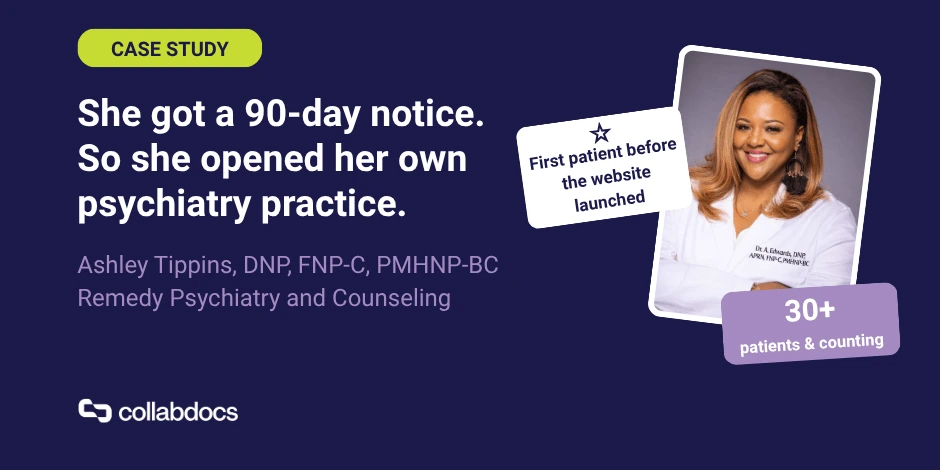
3. Launch a Psychiatric-Mental Health Practice
Mental healthcare continues to have significant demand, creating opportunities for psychiatric-mental health nurse practitioners (PMHNPs).
PMHNP-owned practices may focus on:
- Medication management
- Therapy integration
- Anxiety and depression treatment
- ADHD management
- Long-term mental health support
Because mental health regulations vary by state, PMHNPs should verify practice authority, prescribing requirements, and collaboration rules before launching.
4. Start an Aesthetic Medicine Practice
Aesthetic medicine is a growing area for NP entrepreneurs interested in combining clinical care with wellness and cosmetic services.
Possible services may include:
- Injectable treatments
- Skin health services
- Medical-grade skincare
- Wellness consultations
However, aesthetics requires more than clinical knowledge. Successful practices also depend on:
- Patient trust
- Branding
- Marketing
- Training
- Compliance with state regulations
One important compliance note: aesthetic and injectable services are often regulated separately from general NP practice. Many states impose physician delegation, supervision, protocol, or facility requirements specific to cosmetic and injectable procedures that go beyond standard collaboration rules. Treat this as its own compliance check and verify the requirements for each service you plan to offer with your state medical and nursing boards before launching.
5. Create a Wellness or Preventive Care Business
Many patients are seeking proactive approaches to health rather than waiting until illness occurs.
Examples include:
- Health coaching programs
- Preventive health memberships
- Lifestyle education
- Wellness consultations
NPs should clearly define whether services involve medical diagnosis and treatment or fall into non-clinical education/coaching categories.
6. Develop Chronic Disease Management Services
Chronic conditions affect millions of patients and require ongoing management.
NP entrepreneurs may create services focused on:
- Diabetes management
- Hypertension care
- Weight management
- Cardiovascular risk reduction
These models can work well because they focus on recurring patient relationships rather than one-time visits.
7. Build a Healthcare Consulting Business
Not every healthcare business requires direct patient care.
NPs may use their expertise for:
- Clinical consulting
- Healthcare education
- Chart review
- Staff training
- Healthcare business coaching
This can be an option for experienced clinicians who want flexibility outside traditional practice.
8. Offer Occupational Health Services
Occupational health businesses support employers with workplace healthcare needs.
Services may include:
- Employee wellness programs
- Physical exams
- Health screenings
- Workplace injury evaluations
This model may require developing relationships with local businesses and understanding employer healthcare needs.
9. Create Healthcare Education Programs
Experienced NPs may develop educational resources for:
- Patients
- Healthcare professionals
- Organizations
- Students
Examples include:
- Continuing education programs
- Online courses
- Clinical training
- Health education materials
10. Develop a Healthcare Membership Model
Membership healthcare models allow patients to pay recurring fees for defined services.
Examples may include:
- Direct primary care memberships
- Wellness memberships
- Preventive care programs
NPs should carefully structure these models to comply with healthcare regulations, including state insurance laws that may apply to membership arrangements, and clearly communicate what services are included. Direct primary care exemption statutes vary by state, and some states have none, which means a membership fee structure could be treated as insurance in those states. Verify how your state classifies these arrangements before launching.
Marketing Is Essential for Every Healthcare Business
Regardless of the healthcare business idea you choose, attracting and retaining patients is one of the biggest challenges for new practice owners.
Successful NP entrepreneurs often focus on:
Building an Online Presence
Important foundations include:
- Professional website
- Google Business Profile
- Patient reviews
- Educational content
When using patient reviews in your marketing, keep two compliance rules in mind. Under the FTC Endorsement Guides, do not solicit or incentivize only positive reviews or suppress negative ones. Under HIPAA, never confirm or deny that someone is a patient when responding to reviews publicly, even if the reviewer shares details about their own care.
Creating Patient Education Content
Content marketing helps potential patients understand your expertise.
Examples:
- Monthly newsletters
- Blog articles
- Social media education
- Health guides
Staying Connected Through Email Marketing
Email marketing remains a valuable way to maintain relationships with current and prospective patients.
For healthcare practices:
- Send consistent educational content.
- Avoid sharing protected health information through unsecured email.
- Include required unsubscribe options for marketing emails.
- Provide clear next steps for patients.
What Do NPs Need Before Starting a Healthcare Business?
Before opening a practice, NPs should consider:
State Practice Requirements
NP practice authority varies by state. Requirements may include:
- Physician collaboration agreements
- Prescriptive authority requirements
- Practice ownership rules, including corporate practice of medicine restrictions in some states
- Controlled substance regulations
Always verify requirements through your state board of nursing.
Business Planning
A healthcare business plan should address:
- Target patient population
- Services offered
- Startup costs
- Marketing strategy
- Revenue model
- Staffing needs
Compliance Infrastructure
Healthcare entrepreneurs should plan for:
- HIPAA compliance
- Appropriate documentation
- Credentialing requirements
- Malpractice coverage
- Billing processes
Final Thoughts: The Best Healthcare Business Idea Is the One You Can Build Successfully
Healthcare business ideas continue to expand as patients look for accessible, personalized care. For NP entrepreneurs, the right opportunity depends on your clinical background, desired lifestyle, market demand, and ability to build sustainable systems.
Starting a healthcare business is exciting, but it also requires careful planning. Understanding your state requirements and building the right professional support system can help you move forward with confidence.
If your healthcare business requires a collaborating physician, CollabDocs helps NPs and PAs connect with qualified physician collaborators through a process designed to support compliance with state-specific requirements.
Ready to take the next step toward building your practice? Learn how CollabDocs can help you find a collaborating physician.
Sources
- American Association of Nurse Practitioners (AANP) Practice Information by State
- National Council of State Boards of Nursing (NCSBN) APRN Consensus Model
- Health Resources & Services Administration (HRSA) Telehealth Resources
- U.S. Department of Health & Human Services HIPAA Guidance
- U.S. Drug Enforcement Administration and HHS, Fourth Temporary Extension of COVID-19 Telemedicine Flexibilities for Prescription of Controlled Medications
- Federal Trade Commission (FTC) Endorsements, Influencers, and Reviews Guidance





Important Notice: Collaborating Docs provides administrative and operational facilitation services to support the formation and ongoing management of collaborating physician–APC relationships. Collaborating Docs does not provide legal, medical, or regulatory advice, and nothing in this post should be construed as such. Compliance with applicable state and federal laws — including state-specific collaboration, supervision, and prescriptive authority requirements — is the responsibility of each individual provider and practice. Providers are strongly encouraged to consult qualified legal counsel regarding their specific arrangements and applicable regulatory requirements.